Ultratremor
2026
Germano Dushá is a curator, writer, and cultural agent with a law degree (FGV Direito SP) and a postgraduate degree in Art: Criticism and Curatorship (PUC-SP). At the intersection of aesthetics, critical thinking, and esoteric traditions, his practice assumes multiple forms—as curatorial, literary, and hypermedia experiments—to investigate social imaginaries, and to dwell on the energy fluxes connected to radical subjective experiences and transmutation processes.
Contact germano@ofora.org
God is on the loose!—screams Caetano Veloso on September 15, 1968. Through all the booing and yelling, the band kept playing as best as they could as the artist stopped the song “É proibido proibir” (Prohibiting is Prohibited) midway at Festival Internacional da Canção (FIC, the International Song Festival) to give an impromptu speech in reaction to the infuriated part of the crowd, which insisted on interrupting him. Like a sudden trance to go along with the linearity of his rant, the singer appeared to wield an esoteric shield against the commotion, as he opposed repression from those committed to a left-wing nationalism that did not tolerate any signs of foreignness or religiousness.
In the year of Sexta-feira Sangrenta (Bloody Friday), Passeata dos Cem Mil (the 100,000-Strong March), and AI-5 (Institutional Act #5), this episode is emblematic of the social climate and important aspects of political debate then and now. It also marks a high point in a series of radical aesthetic experimentations. And the shouting of that sentence—which carries mystical aspiration and the heft of a popular saying, fatally forgotten by shared memory, might shed light, in rational and esoteric ways, on nuances of Brazil’s social imaginary, and the traumas the country experienced in recent history. Likewise, it might prompt reflection on a subject’s ability to straddle all places and demands, and on our collective potential for action.
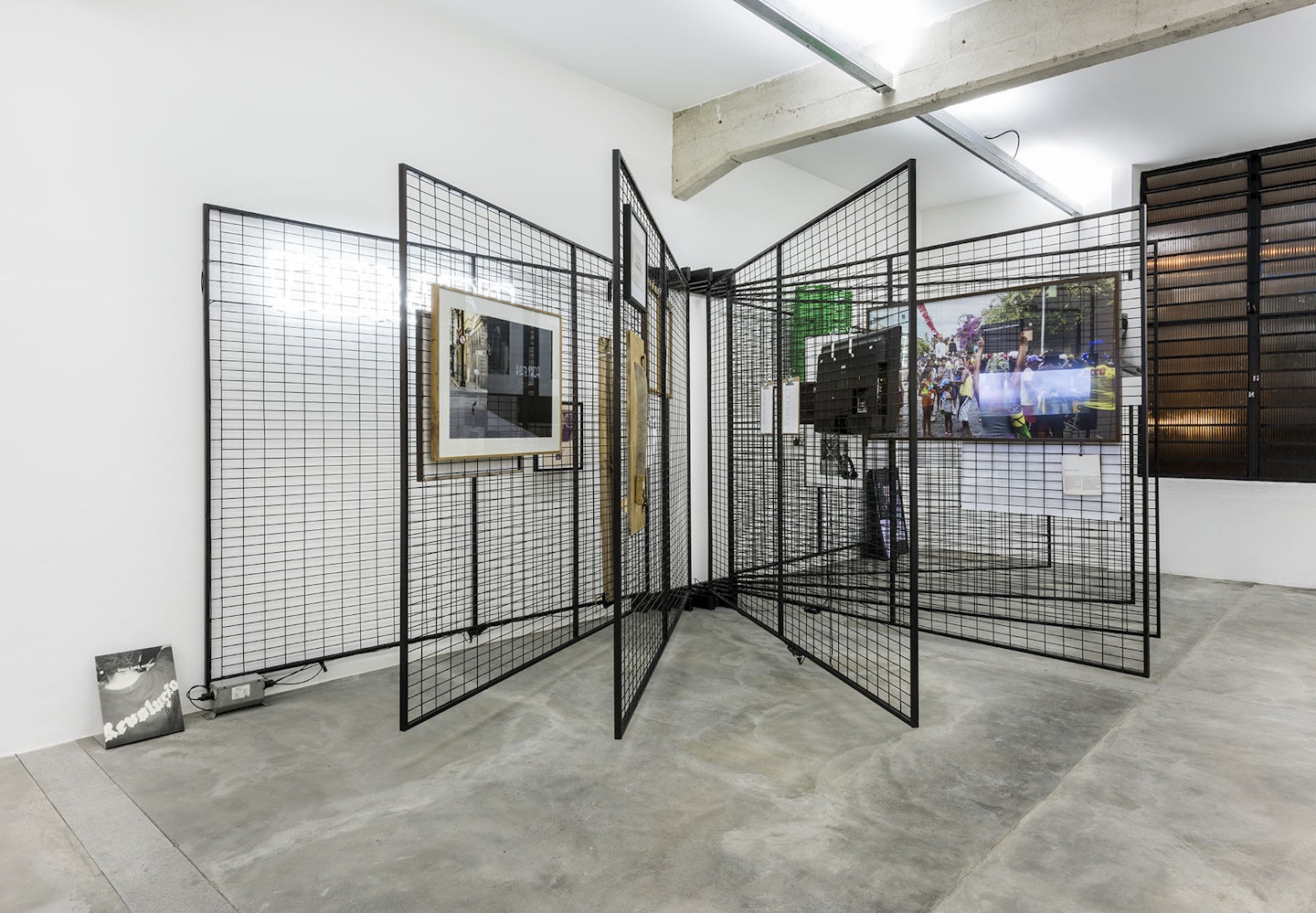
Designed for a device resembling a giant book made of gridwall panels, this project comprises works by two generations: from 1968 through the early 1980s, and from 2013 through 2017. In revisiting documents, reviewing narratives, and proposing new dialogues, it seeks to address issues of freedom, repression, collective ecstasy, aesthetic trance, institutional collapse, and crisis management.
These intersections outline a nonlinear temporal picture of comings and goings, seesaws, and entanglements, in a bid to approach the troubled frame of mind of our dreary current scenario. Finally, it pores over the undesirable, forceful impositions and the blatant historical, economic, and organizational depletions we are facing, so that, with luck, we might envision and experience what we don’t know or haven’t yet realized.