Ultratremor
2026
Germano Dushá is a curator, writer, and cultural agent with a law degree (FGV Direito SP) and a postgraduate degree in Art: Criticism and Curatorship (PUC-SP). At the intersection of aesthetics, critical thinking, and esoteric traditions, his practice assumes multiple forms—as curatorial, literary, and hypermedia experiments—to investigate social imaginaries, and to dwell on the energy fluxes connected to radical subjective experiences and transmutation processes.
Contact germano@ofora.org
There are, indeed, things that cannot be put into words.
They make themselves manifest. They are what is mystical.
– Ludwig Wittgenstein
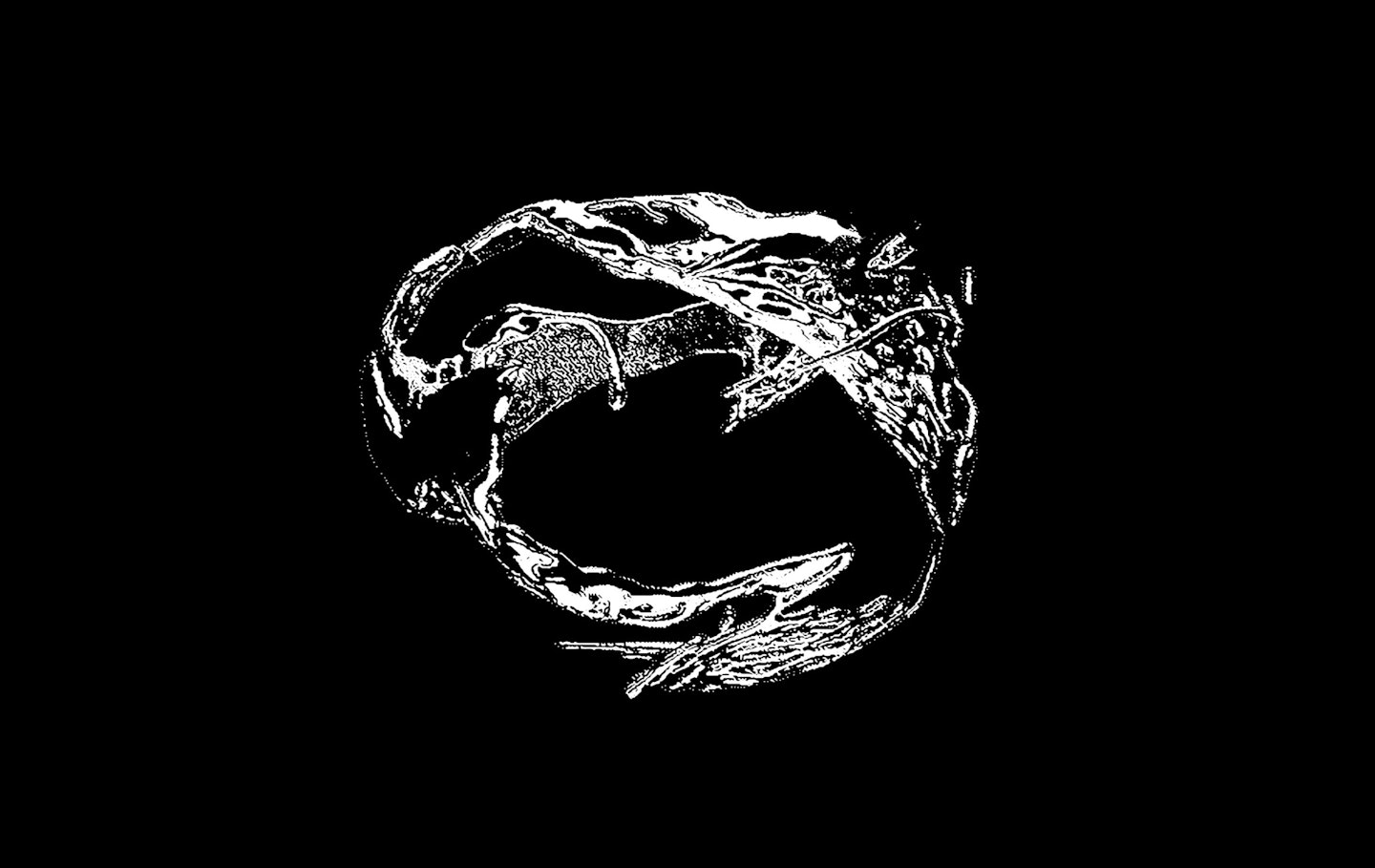
Matter shudders. From its deep concentration in a single point, new movements spill over. It undergoes impulses, cuts, twists and folds. It stretches into lines. It rises, falls, and spreads out. It draws paths and gives contours to prominences. It turns inside out. Soon it seeks its destiny, surging into an unlimited space... Pouring itself into infinity.
—
Paulo Monteiro's trajectory is intertwined with a generation of artists who emerged in the 1980s, while Brazil was still under the yoke of a civil-military dictatorship, but had already begun a cultural and political transition that would culminate in the end of that regime. In the arts, this context sparked discussions of a certain return to pictorial practices after more than two decades with formal experimentation at the centerstage of the country's artistic production. Having gravitated around conceptualism or manifestations directly engaged in the political debate, a number of young artists were once again inclined towards drawing and painting as their means of expression. After all the ruptures, expansions, and inventions of the previous years, steeped in a confused and troubled socio-political and economic context, these new works were born in an atypical atmosphere. Artists used less noble materials, preferring whatever was at hand; and aesthetic predilections and themes were less defined, the various genres of interest became blurred, and improbable combinations were made: abstraction and figuration, humor and dismay, improvisation and rigor, screams and silence.
Born and raised in the city of São Paulo, Brazil, Monteiro made his first artistic forays as a teenager, around the age of sixteen, with the self-oriented and independent creation of comics. Inspired aesthetically by the likes of Robert Crumb, Gilbert Shelton, George McManus and Luiz Sá, and ideologically and strategically by punk zines, Monteiro began collaborating with some publications and circulating what he created in the form of pamphlets among friends, printed at low cost and delivered from hand to hand.
In his early twenties and spurred above all by Philip Guston, whose work he had seen up close at the 16th São Paulo Biennial of 1981, Monteiro decided to take up painting as a regular occupation. The marriage of sophisticated pictorial practice and the spontaneity of the daily cartoon production in Guston's work was a decisive stimulus to Monteiro’s own art-making. For him, the North American artist’s works created a representational field of peculiar verve: bold strokes that establish a heady—and not infrequently, morbid and obscure—mixture of urban chronicles, absurd figures, and shapeless masses. Capable of concomitantly reconciling the total freedom of abstraction, the acid figuration of satire, the colossal tradition of the still-life, and the cartoonish banality of comics, Guston made an acute contribution to his time. He gave contours to a century built on excruciating historical accumulation, immersed in the great political projects and in a globalization process that engendered mass culture and the great metropolises. This was the missing link, the spark that ignited Monteiro’s experimentations.
Between 1983 and 1985, alongside high school friends Carlito Carvalhosa, Fábio Miguez, Nuno Ramos, and Rodrigo Andrade, Monteiro formed the legendary collective studio Casa 7. The quintet met at the Colégio Equipe, a progressive institution founded in 1968 which became known for the artistic success of its alumni, such as filmmaker Cao Hamburger, artist Leda Catunda, and the Titãs—one of the most prominent rock bands of Brazil in the last decades. In this sense, Casa 7 was a space for intense exchanges, and the experience lent its components, all in their twenties, a certain sense of unity. With shared spaces and shared creative scope, they came as close to a music band as young painters could aspire to be. In the few photos that document this period, they pose with the same swag of their counterparts on stage chanting provocative lyrics over simple yet intense musical compositions, common to post-punk and new wave bands.
Although the experience at building number 7 in Vila Judith on Rua Cristiano Viana lasted less than three years, it was potent enough to forge a perennial bond of friendship and to leave a mark on the personality and the later production of all its members. They shared more than a roof: in their personal accounts of this experience, they commonly refer to both the support and the harsh criticism they dealt each other, in an atmosphere of instigation but also of tensions and sometimes weariness.
References, techniques, and aesthetic orientations were devoured in communion. Aspects of the transition from Abstract Expressionism to Neo-Expressionism, the return of figurative painting, and the dawning of the information age all came into play. At this point, Guston was the main mentor for the whole group. Not only for his inventive aesthetics, but for his political stance, his muralist practice, his collaboration with Mexican artists, and for the courage and integrity with which he undertook his choices and tackled thorny issues, very much in tune with the situation of young people living in a country in the tropics, jaded by the authoritarian violence of the military. Together they also looked at the work of other American painters, such as Julian Schnabel, and at the Transavantgarde, as the critic and art historian Achille Bonito Oliva called the Italian movement at the turn of the 1970s to 1980s led by Sandro Chia, Enzo Cucchi, Francesco Clemente, Marco Bagnoli, and Mimmo Paladino. After periods marked by modernism, conceptual art and minimalism—which they considered a certain vow of austerity—these artists returned to figurative art. Based on a fragmented reading of history and a free movement through references from different eras, they placed the human figure, classical iconography, and the ins and outs of everyday life at the center of their creations, emphasizing subjectivity, the creator’s emotions, and chromatic expressiveness.
In a youthful impulse, instigated by punk rock and charged with mournful twists—perhaps because of the political situation in Brazil, perhaps because of the loss of childhood and the relentless dawn of maturity—they used construction paint to work on huge cardboard paper cut-outs, weighing on the energy with dark colors and broad, well-marked strokes. The results were dense, strong-willed and somewhat distressed swirls of ink that give rise to amorphous, somber characters and scenarios. Instead of well-finished works, what surfaced were emerging processes triggered by a spontaneous, fast-paced, and intense furor. These attributes distanced themselves from their contemporaries of the "80s Generation," whose works they considered too lightweight and cheerful.
The rarefied art scene at the time did not prevent them from showing their work with a certain degree of regularity on the traditional circuit. As a kind of collective, they participated in several exhibitions, circulating through institutions such as Paço das Artes in São Paulo, the Museum of Contemporary Art of the University of São Paulo (MAC USP) and The Modern Art Museum of Rio de Janeiro (MAM Rio). In 1985, they were present at the 18th Bienal de São Paulo—called "Grande Tela" (Big Canvas)—as part of the enormous corridor of paintings lined up by curator Sheila Leirner. This was both the highlight and the group's last exhibition. That same year, the residence—which belonged to Rodrigo Andrade's family—was sold. Casa 7 had come to an organic end.
Soon enough, the political context changed and each one went their own way. In common, however, remained the confrontation with their own references. It didn't take long for them to reach the inevitable realization that they would always be on the fringes of the movements that came from the outside; hamstrung by their provincial situation in relation to the center of European and North American art. And so they launched into new experiences and other sources of inspiration, venturing into different mediums, and developing, each in their own way, a remarkable body of work.
In the transition that came with the ensuing years, Monteiro began to approach certain issues in Brazilian art. The current revisions of the Concretism of the 1950s and the Neo-Concretism of the 1960s, especially through the work of Mira Schendel and Willys de Castro, imposed their importance in his artistic formation. Monteiro was influenced by what he saw, such as the unfolding of the pictorial plane in a three-dimensional field, a kind of painting that flowed out into space: objects that could not be grasped in their entirety, that projected themselves beyond their tangible extremities. In this movement between processing and reworking what he absorbed, Monteiro found his own path, illuminated from different sides, developing an unusual oeuvre, as specific as it is general, as cohesive as it is dynamic.
From drawings and paintings, his production segued into a series of sculptures made by tying together and balancing offcuts of pipes and bits of rubber, pieces of wood, curtain tapes, metal shelving brackets, and other found materials. The sum of these items constitute varied arrangements, of distinct natures, dimensions, weights, colors, and textures. Each piece emanates energy in a unique way, and their variation is reinforced by the diversity of raw materials, but in the group that seems to surge out of the wall and spread spontaneously throughout the space, it is possible to perceive a collective manifested will. This intertwined vibration runs along the fine line between support and disassociation, navigating the precise border between stability and precariousness. These works, thus, reveal the existential tension between standing on solid ground, and losing one’s balance completely.
By experimenting with these new conceptual and physical resolutions, the artist further deepened the central motifs and qualities he had already developed in the earlier years of his career, especially investigating the innate instability of matter and its ineffable capacity for transformation and conformation; the drama of relationships, affinities, junctions, and ruptures; and the ability to swing, dribble, improvise, and negotiate. All dynamics which we are intrinsically subjected to on a daily basis.
During this period, Monteiro participated in the II Biennial of Havana, in Cuba (1984), and took part in various shows here and there. Selling some pieces occasionally, he basically lived from odd jobs. He was torn between the issue of money and the unavoidable path of his work.
—
His creations deal with the abysmal substance of what is ultra-common, which we all can feel in our sinews. However, he does not go for representations; his subject is not the things, but the potential of life itself, that force which precedes everything that exists. Each move he makes aims for the essential drive prior to the phenomena themselves, the disposition prior to the idea. What interests the artist are the plural ways through which life reveals itself. Not as a catalogue of historical facts, but as a diagram of possibilities. What is explicit in his drawings, paintings, and sculptures are the confrontations between different aspirations and forms of life… And the new inventions and developments that emerge in the course of spiritual and material transactions. Something that can be found in any corner of any city, in any place on this planet.
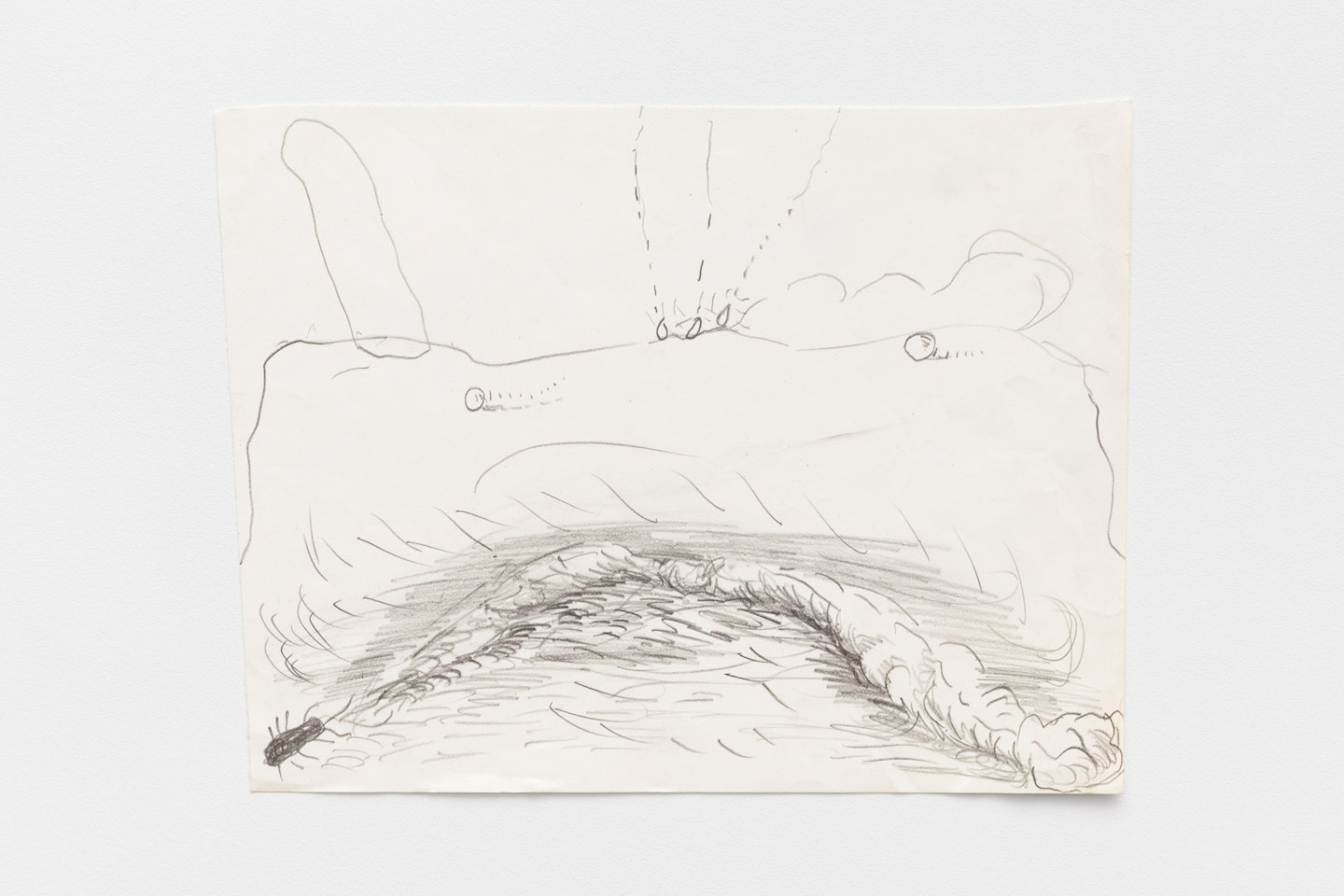
Monteiro's lines demarcate what can be observed in the interior of forms, revealing the chaotic relation of different forces in play, and the processes through which they are constituted. Although there is a keen devotion to formal thought, there is never an attachment to technique. When maneuvers and dexterities are recognized as responsible for producing reality, it is not their material function that is at stake, but rather their ethical nature, the spirit that mobilizes them. Long before technological fads, the creative inclination and irreverence of the soul had already made its mark on Monteiro's practices. Form is indeed his primary subject, although not as a mere revelation of appearance, but as a vital manifestation. He takes form as a dynamic principle, as a process. Form is understood, thus, as that moment in which the friction between multiple vectors reaches a certain degree of intensity, needed to take shape, to become visible. The very instant when everything is formally possible.
Based on general principles and actions, Monteiro's works are distinguished by a particular characteristic. As if language, in its most universal aspect, is suddenly taken by a local accent, showing its singularity as a piece that speaks directly to the whole. With extraordinary fluency and eloquence, he confronts us with a range of imperatives, ranging from the performance of Play-Doh to the experience of a terrible structural collapse. From jokes and anecdotes to trances and ecstasies. From ornamental leaps to the collision between two marbles. From newfangled flirtations to epic wars. From the vigor contained in the lava spewed by a volcano, to the mystical surface texture of the fresh cheese on the table. And it goes on in the consistency of the banana jam, in a string lying loose on the ground, in the twist of an ankle, in the sweat of the clay… This is, in the guttural dimension of life, in the danger of being alive, all spurring from the very core where it germinates.
With his own dialect and a rare power of synthesis, Monteiro is able to account for a remarkable qualitative amplitude and still maintain an unmistakable stylistic density, amalgamating the saga of the thing in its infinite stunts. At times determined, at times unstable, be it solid or liquid, in his work the thing runs, falls apart, remakes itself, up and down, inside and out. The planes spread, stretch and fray, as the morphological layers of their backgrounds are displayed. The lines tremble, rise, merge into each other, creating zones of turbulence governed by different gravities, like primitive spaces where nothing is definitive, and in which the essence of the landscapes and individuals run free through an indefinable spectrum of mutations.
His work contributes to the understanding of nature as a continuous motor-calculation; as a multiplication of factors, setting out energies and states of mind. As sequences of results composed of intentions arising from all axes that intersect and travel away from one another. Everything runs according to the chemical impulse of the verb, like mixtures of atomic interactions and molecular outpourings forging celestial spheres, the horizons, the mountains, the oceans, the people, the outdoor sports.
Permanently exposed and subject to imminent disarray, the folds born of these encounters reveal the mortar of which all things are made; the geological structure of a plot of land, the firing of affections, the virtues of a garden, the foundations of a shelter, all converging over their total susceptibility to radical alteration, to discontinuity, to unraveling, to falling apart. These are topological studies for a vast taxonomy of temperaments.
—
In 1992 Paulo joined the staff at São Paulo Cultural Center – CCSP, where he would work for almost two decades. The daily routine of this large cultural institution unsurprisingly accounted for a fixed part of his life, while the meager salary demanded that he undertake paid activities in parallel that left him little time for his artistic production. Nonetheless, his works were shown in the 22nd Biennial of São Paulo in 1994, curated by Nelson Aguilar under the motto "Rupture with the Support." The show pivoted specifically on the poetics and practices of Hélio Oiticica, Lygia Clark, and Mira Schendel.
On that occasion, the artist exhibited assorted floor-pieces made of molten lead. In continuity with the previous work with objects in balance and bindings, this process revolved around attempts to keep a given volume of clay standing, experimenting against its natural urge to fall under the imposition of gravity. Beyond and subjacent to that, was the necessity to see which figures emerged from this struggle. The intention was not to associate those forms to tangible narratives, but rather to observe them as referential points, as metaphysical suggestions… Indications capable of just cutting through the edge of abstraction into something that one can begin to outline as a vertical object or a thing that prostrates itself horizontally, if it is an upper or lower part, a head or a foot.
When they were at the right stage, these small mounds would go to the foundry. The result was a raw register of the gesture of containment of each matter, seemingly putting into practice an undefined equation of forces, at times indicating outburst and enthusiasm; at others, laziness and dissolution. Thus, what characterizes them is the uncertain zone in which they are all located: definite conclusions are impossible. These pieces do not readily yield their identity. What one is able to perceive in these sculptures is, first of all, how they embody the raw material that lends them their flesh. In a way, it is as if they were signs from a primitive alphabet of metal, crawling across the ground to preserve in themselves the primal potency of language.
Thus, the artist played in a definite way with his main interest: he pitched himself against the materialities of the world, practicing how his experience relates to the substratum of things. Driven by this very singular frequency, he exercised himself in a productive clash with matter.
With his work in full bloom by 1994, Monteiro also held two solo shows in galleries in São Paulo, and took part in group exhibitions in two other galleries, one in Germany, the other in the United States. After that, a few institutional opportunities arose, notably the V Biennial of Cuenca, in Quito, Ecuador, in 1997. He would only do a solo show again in 2000. The financial aspect, of course, remained a major limiting factor throughout this period. He lacked the resources to dedicate himself to his work and to have a proper studio. Also, he did not have the basic conditions to store his pieces safely. At one point, he lost a significant number of sculptures due to the poor conditions of conservation, others to the lack of adequate storage space. Setbacks of this kind offer a vivid snapshot of the many challenges plaguing artistic production in Brazil, where precarious infrastructure and systemic disinterest in supporting culture are seen as individual struggles, producing distortions and grueling working conditions for most artists, regardless of talent or merit.
Despite these difficulties, the first major breakthrough in Monteiro’s career finally came in 2008: an anthological exhibition held at the Pinacoteca do Estado de São Paulo—one of the leading institutions of Brazil—showcasing practically all his work outside Casa 7, with pieces made from 1989 onwards. In the following years, however, there was little or nothing to enthuse about.
—
Monteiro's practice empirically investigates what is theorized in solid and fluid mechanics, branches of Physics that study the behavior of materials subjected to external stresses. With his hands, he experiments the effects of different forces, variations in temperature, density, acceleration, pressure, viscosity, and speed over matter. And what emerges from these processes is an invariably identifiable, yet inherently unstable, form. Whether in a more sedimented or more liquefied state, its identity becomes recognizable to the exact extent to which it affirms its transitory and indefinite character.
Everything stems from an identical point which is constantly provoked to exercise its plasticity, synthesizing the systems that store, transfer, and convert energy. It is the theater of material flows, the dramaturgy of the sands, stones, rocks, and ridges that run in the veins, ducts, rivers, and waterfalls. In performing these transmutations, Monteiro reminds us how everything that exists materially originates from the dispositions of the soul. Such things are reminiscent of the physiology of the ancients based on humors—as the liquid substances found in the human body were once called—which were held responsible for the temperament and characteristics of an individual.
With this in mind, it is possible to travel back and glimpse the choreography of the raw materials in the genesis of the Earth, bubbling in the primordial broth of matter until they impregnated themselves in the clay. Under the laws that structure the logic of the cosmos, the primal substances dance freely, flowing in their quirks, sharpening their witticism, their laughter, afflictions and sorrows.
In this way, Monteiro’s work signals the paradox embedded at the vortex from which things are born. Under brightness or darkness, in the positive or negative polarity, the artist’s trace is tenacious but very humorous. Grim but affable. It seems to suffer the pains of the world, but not without having fun along the way. It hurls itself from the heights toward the plains, lets itself overflow when it is on the edge, and opens itself to be completely affected in the face of new colors. It acts, mimics, and simulates when it wants to, but it also lives in a raw way, putting its own skin in contact with what surrounds it. The magnitude of the metaphysical thinking—which speculates about the foundation of being and the ingredients that give tone to existence—catches the eye, but also the most genuine, disinterested formulations, the way of speaking, the slang, the chit-chat. Notions of displacement and of distance appear as tangible, either physically or in metaphorical terms. The frontiers demarcating what is intimate and what is external are distorted. This existential gymnastics is applicable to any and all bodies.
—
After the lean times of the decade between 2000 and 2010, Paulo started working with a gallery that seemed promising, and the relationship gave him a new impulse. It was then that the Museum of Modern Art in New York (MoMA) showed interest in buying some of his works. He had already left the São Paulo Cultural Center and was seeking new paths, and the New York deal was an important opportunity. However, various events took over and the transaction did not happen at the time. At which point Monteiro had to take matters into his own hands: since he was widely known and appreciated in the Brazilian art scene, it was easy to make contact with some of the big-league gallerists in the country, yet things continued to stall. Finally, he came across a gallery that had just entered the system with an unusual gusto. Already a well-recognized artist, Paulo found his place among a group composed predominantly of people in their twenties and thirties. From then on, things kept on moving, always at their own pace but taking him to many corners of the world.
—
In an unrestrained plunge toward the trace that speaks to him, the artist radically reduced the degree of his gesturality. Increasingly, the gesture now bursts forth not to express a definite idea, but as a movement that assumes and carries the capacity to speak, arising only to give itself a mediating body. It is therefore a mediation that exists without an end, that solely exhibits, revealing itself as means and as potency. It is the doing without acting,(1) when nothing needs to be said beyond the demonstration of the ingenuity itself. It is the elusive utterance, always in transit, entering and leaving, in a state of perpetual morphology.
And each act lends new muscle fiber to the ethical dimension of this purposeless medium. And the threads leak through the cracks in the cognitive structures, seeping into the hardened systems of thought, opening paths to other perceptions, other ways of creating, of existing. They drip continuously, intertwining and untangling themselves one by one, weaving a variety of moods, agreements and disagreements… Until they merge into the whole again.
—
Behind an iron gate marked by time and graffiti, on a quiet street in Barra Funda, São Paulo, his studio takes up space in a large shed with a simple rectangular plane. Around every corner, a clear intention emerges repeatedly, but never exhausted, as if it mobilizes with its energy those countless objects from within. A singular impetus unfolded in many ways, physically revealed in the spiritual properties of large, small, and tiny pieces, through cold or warm colors, in bronze, lead, aluminum, iron, canvas, or paper. A vast and ever-changing collection. A spiritual unity derived in a plurality of bodies. A single ecosystem whose parts are many without ever ceasing to be one. Like a colony of bacteria, a forest, a city. Or on an even larger scale: a planet, an entire constellation.
—
The simplicity of his invention only underscores the enigmatic fervor of his experiments. Contributing to the rich history carved by zero-degree operators of the avant-garde at the beginning of the last century, Monteiro outlines the minimum conditions for an event to become visible. He makes use of the weakest images, which can hardly be grasped and reproduced in their completeness. These images are in complete opposition to the highly visible and pregnant images that compose the stratified and canonic iconography in the history of art, or shine at the top of an incessant pile of produced mass culture, (2) The artist undertakes a continuous search for a transcendental, transcultural, timeless, repetitive image, whose function is not to impose itself, but to serve as input for the appearance of something else. In place of imposing a discursive norm, this is the universalism of a breath, a yawn, a laugh—expressions that burst into every corner of the world without making a big fuss, and each time in its own particular way.
His work touches the threshold of nothingness. This nothingness, though, is never empty, but always full of potential; always an open arena for new imaginations, accommodations, and, when the time comes, new dissolutions. In a tireless practice whose fixation develops in a circular process that revisits and reinvents itself, and that has now accumulated a few decades, Monteiro has relied, once and for all, on what has been from the beginning, and will be until the end, his only theme: the movement of the dot in the world.
(1) Giorgio Agamben, “Notes sur le geste,” Trafic: revue de cinéma, 1992.
(2) Boris Groys, “The Weak Universalism,” e-flux Journal, 2010.